
What Miami Gardens Resident Lookup Records Can Confirm
The lead question is not merely whether a name appears. It is what the record can confirm. Miami Gardens incorporated in 2003, while courts, deeds, voter files, and vital certificates sit with Miami-Dade or Florida custodians. A sound resident lookup begins with the source that fits the known clue and records its limits before another source is opened.
| Official record | Clue it can confirm | Custodian | Access boundary |
|---|---|---|---|
| Property card | Owner, situs, mailing address, folio | Miami-Dade Property Appraiser | Free; ownership is not occupancy |
| Court docket | Party role, case, filing date, events | Miami-Dade Clerk | Protected and sealed items stay closed |
| Voter self-check | Status, polling place, districts, activity | Florida and Miami-Dade Elections | Identity inputs required |
| Vital certificate | Birth, death, marriage, dissolution | Florida Department of Health | Eligibility differs by record |
| License or filing | Public role, entity, license status | DBPR or Sunbiz | Business address may not be a home |
Choose the property roll when an address or owner is known. Choose the correct Clerk division when a case is known. Use vital records only for the event they certify. This prevents a Miami Gardens name match from being stretched beyond what its source proves.
Search Miami Gardens Names Across Court Divisions
Miami Gardens matters can appear in the Eleventh Judicial Circuit and Miami-Dade County Court. The Clerk separates civil, criminal, family, and probate systems, so searching only one division can miss a file. A docket can connect a name to a case number, role, filing date, status, judge, attorney, and event list. It does not prove current address, guilt, or that two identical names refer to one person.
| Search control | How it narrows results |
|---|---|
| Last or business name | Core party-search term |
| First name | Separates common-name results |
| Case number | Opens one known matter |
| Court or case type | Limits the division |
| Date range | Confines filing years |
The Florida appellate court search shows how an official portal frames party and case searching.
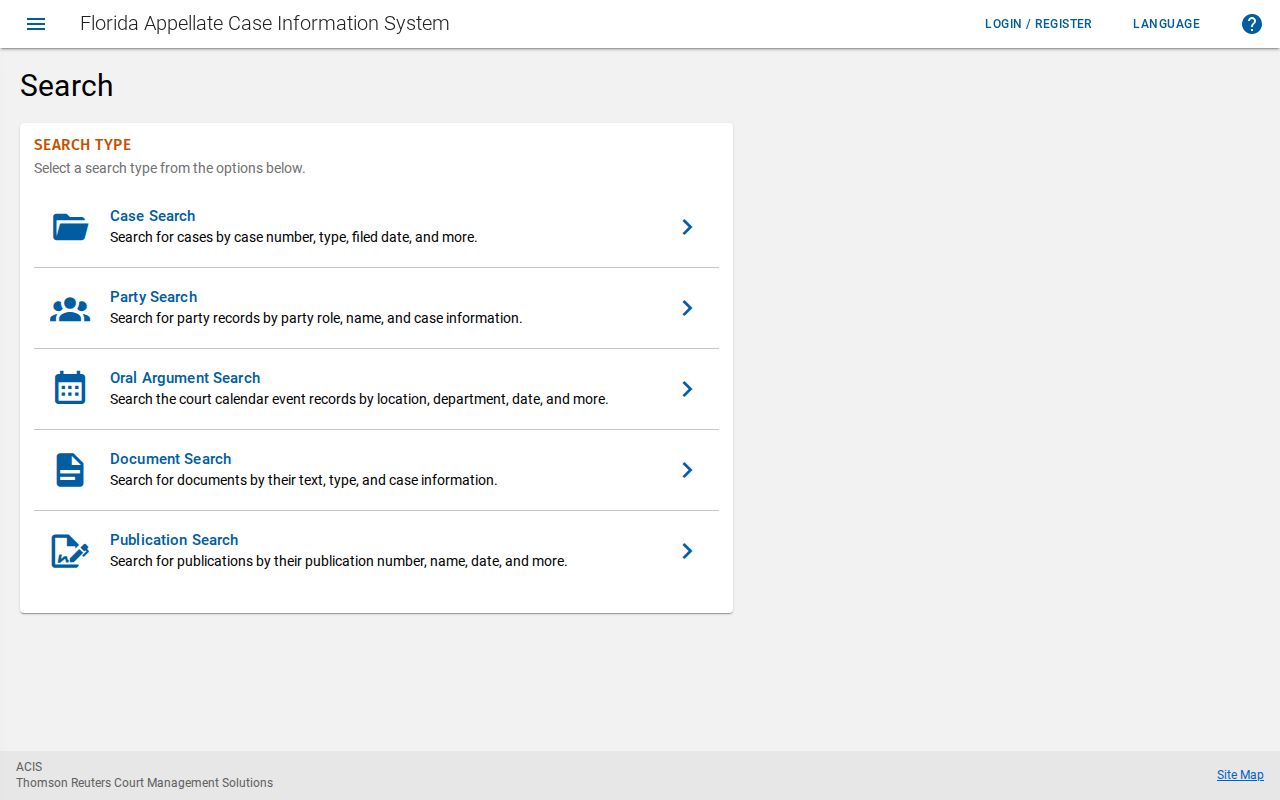
Use appellate results only for appellate matters; local trial files still belong in Miami-Dade Clerk systems. Public registration may expose images that anonymous access does not, while adoption, juvenile, sealed, and confidential material stays restricted.
Verify a Miami Gardens Resident Across Two Records
Common names are frequent in a large, diverse city. The safe method is a two-record identity match in which independent details agree. A name alone is weak. A name plus the same address, spouse, filing date, parcel, or known event is much stronger, though each result still needs context.
- Anchor the name to a Miami Gardens parcel card or dated address source. Copy the folio, situs, owner mailing address, and exact name form.
- Search the right court division with surname variants, first name, case type, and date range. Note each party role.
- Compare the docket with a deed, probate matter, public license, or eligible vital record. Require two useful points of agreement.
- Order a certified copy from the custodian when formal proof is needed. A screen result is not certified.
- Docket
- The dated list of filings and events in a case.
- Index versus image
- An index identifies a record; an image contains the filed document and may have tighter controls.
- Certified copy
- A custodian-issued reproduction formally attested as a copy of its record.
This resident lookup also guards against confusing an owner's correspondence address with a parcel's situs. A homestead flag may support an owner-occupancy inference, but it does not name all household members.
Miami Gardens Requests When Search Pages Stop
Not every useful file has a public name index. City-created permits, code matters, minutes, and correspondence go through the Miami Gardens custodian. County-created court and recorder files go to the matching Miami-Dade office. Under Florida Public Records Law, Chapter 119, a requester need not explain a purpose, but a clear department, name or address, record type, and date range helps staff find the file.
The Miami-Dade Clerk request routing page illustrates the record-category handoff.
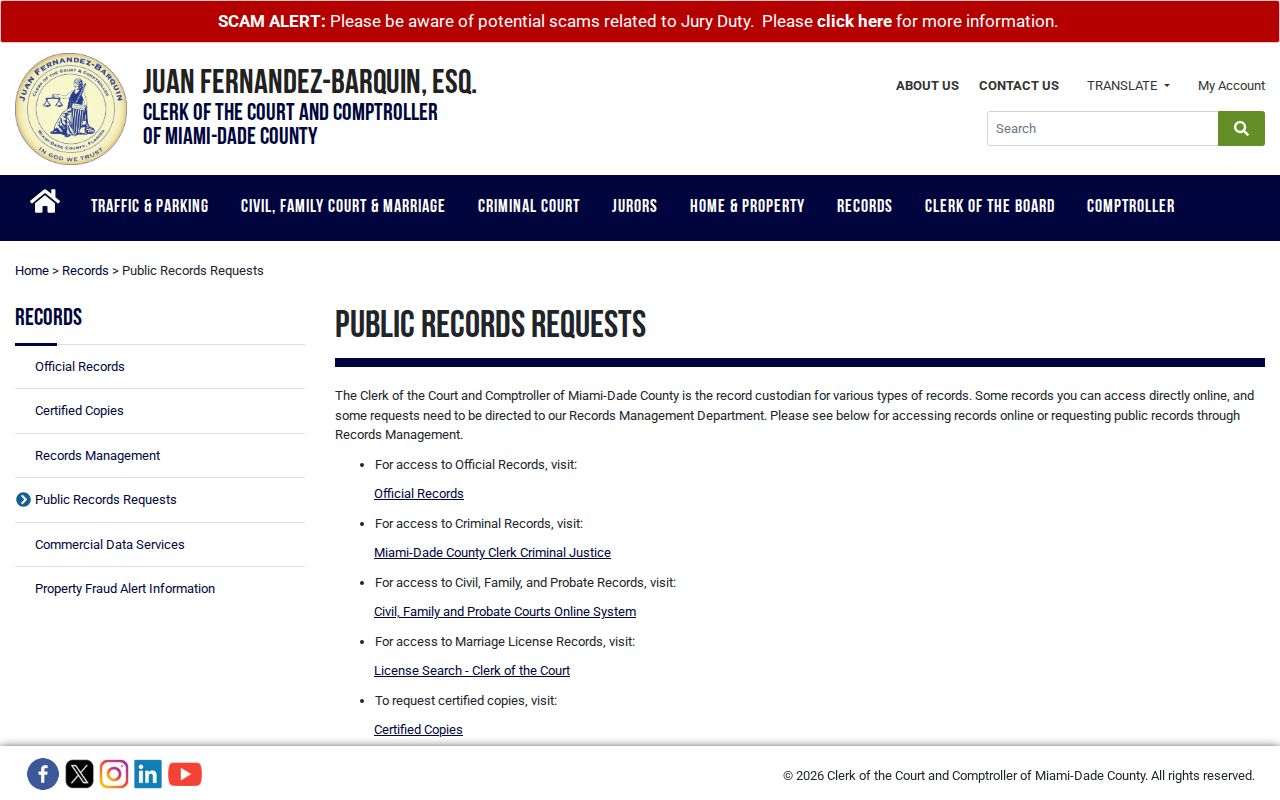
The route matters because the city is not the deed, probate, marriage, or trial-court custodian. For city records, electronic, telephone, and in-person requests remain possible, and the city form is not mandatory.
Miami Gardens Resident Lookup Through Vital Records
Vital certificates answer a narrow event question. Florida birth records under 125 years are confidential and limited to eligible applicants. Death certificates without cause are generally available to adults, but cause-of-death information stays confidential for 50 years except for qualified applicants. Marriage and dissolution certifications are generally public, yet the underlying marriage license or divorce pleadings remain with the Clerk.
The Florida vital records hub leads to current forms and ordering channels.
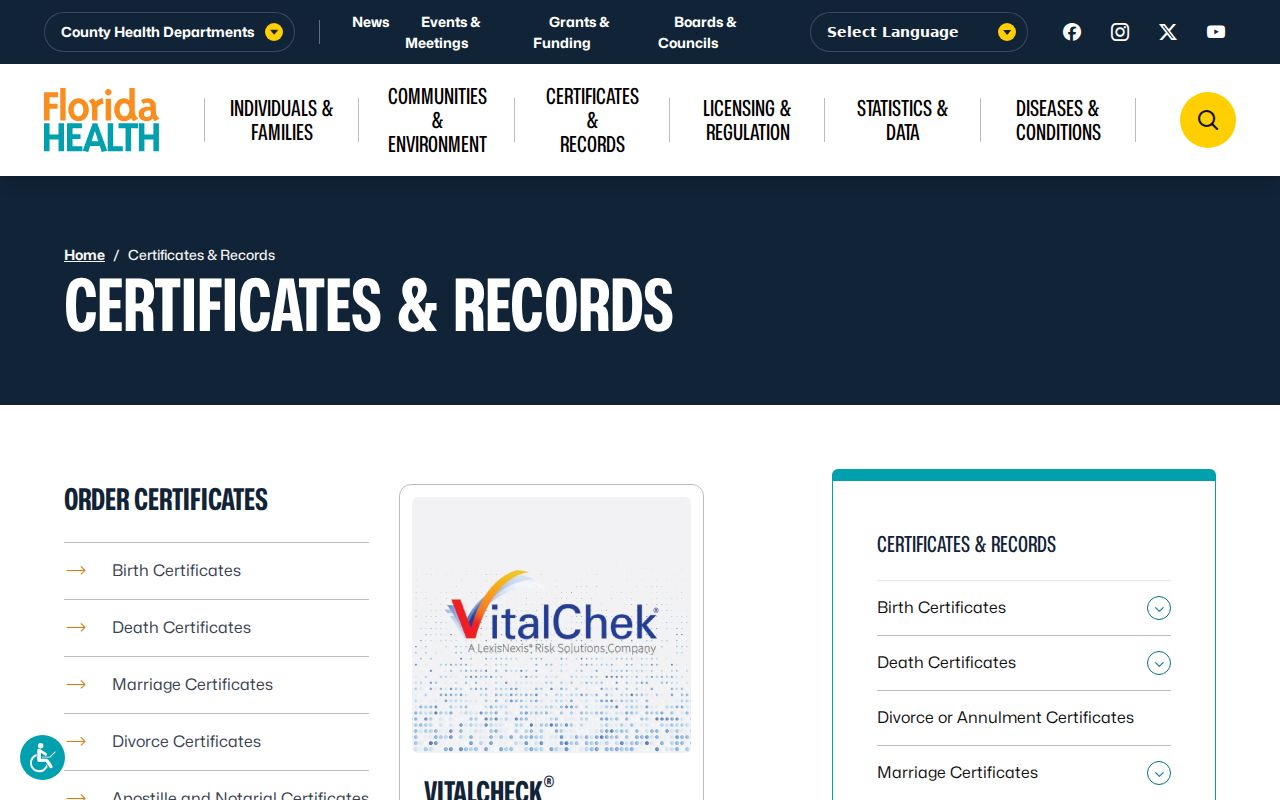
A birth application asks for the registrant, date and place, parents' names before first marriage, applicant eligibility, identification, delivery, and payment. A marriage or dissolution certification does not replace the full Miami-Dade court file.
Find a Miami Gardens Heir Through Probate Clues
Probate is a strong personal-use trail when the goal is to identify a decedent's estate, interested person, or possible heir. Search the family and probate system by the decedent's name, then capture the case number, party roles, filing date, docket entries, and image status. Free registered access may be needed for some images. If year or case number is unknown, the Clerk adds a $2 per-year, per-name search charge for certified-copy work.
Next, check the free Miami-Dade obituary citation index. It covers Miami newspapers from 1896 through 2008 and cites more than 915,000 people. The index points to a newspaper item; it does not supply each article. Compare named relatives, dates, and places with probate. This is more sound than assuming a same-name notice belongs to the Miami Gardens person sought.
Confirm Miami Gardens Public Business Affiliations
Sunbiz and the Department of Business and Professional Regulation add a different identity layer. Sunbiz supports searches by entity name, officer or registered agent, trademark, document number, ZIP, street, or fictitious-name owner. Results may show entity status, managers, agents, principal and mailing addresses, and filing images. A registered-agent office is not proof of residence.
DBPR accepts name, license number, city or county, and license type. The official DBPR license verification page helps check a known licensed role.
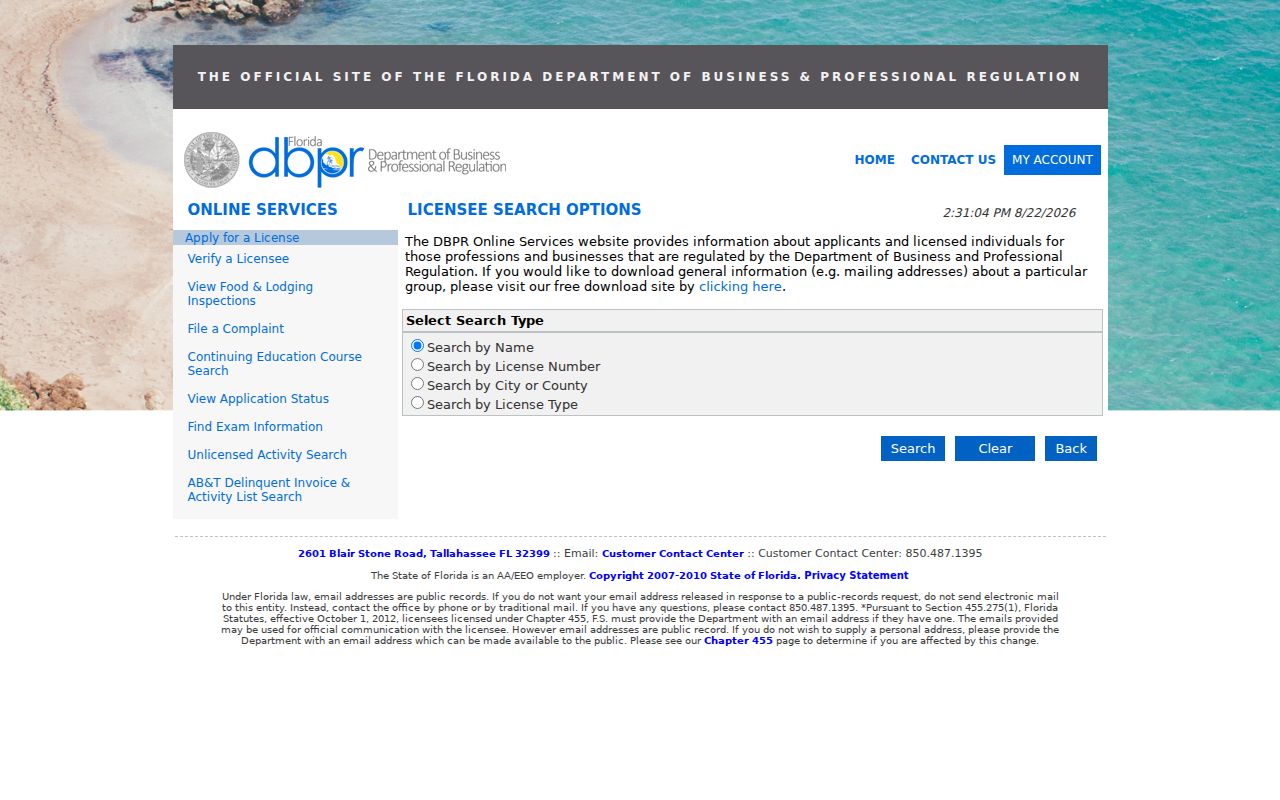
Read the type, number, status, address, and public discipline as role-specific evidence. Florida Treasure Hunt can also surface a reported owner name and locality, but that is only a possible match.
The Florida Treasure Hunt search is the state's free starting point for an unclaimed-property lead.
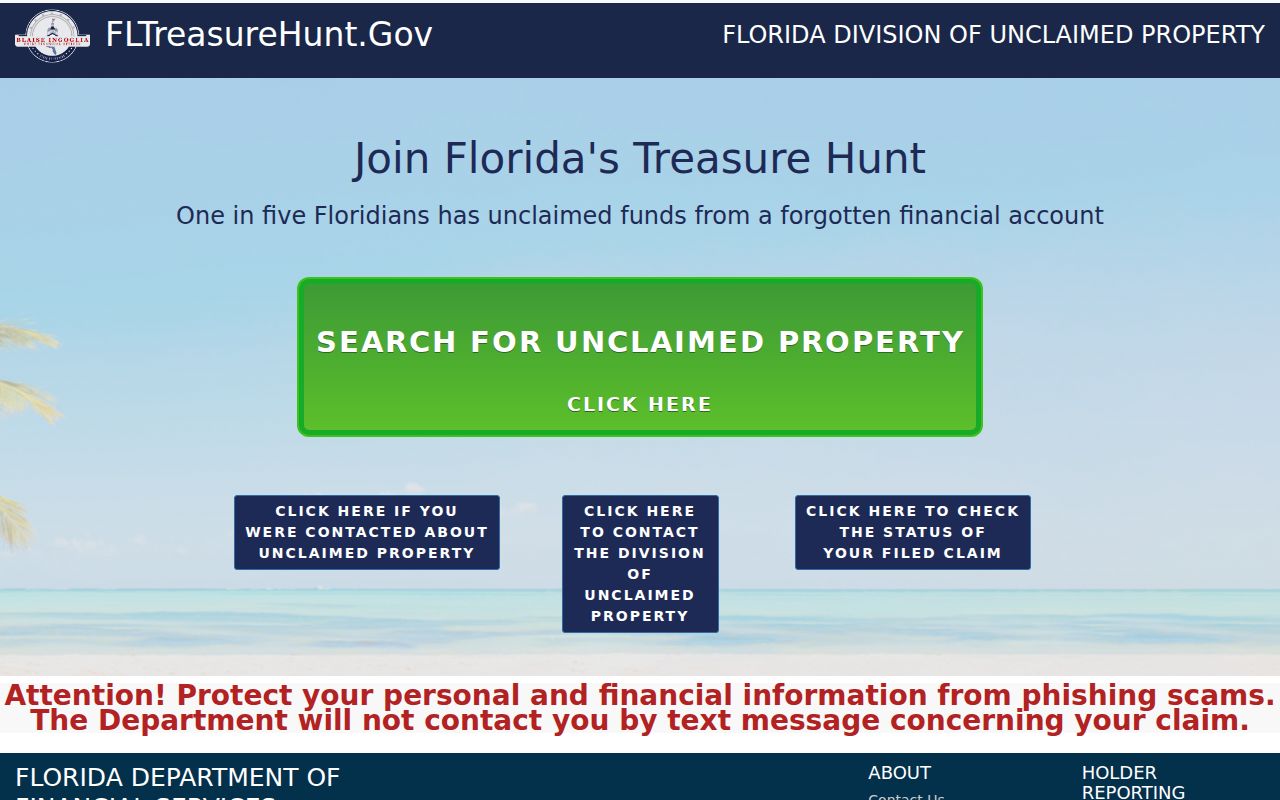
A match requires proof before a claim and is not a current-address record. Its best use is one more clue for a family or estate inquiry.
Where a Miami Gardens Resident Lookup Must End
Official access has firm bounds. Florida's Address Confidentiality Program gives qualifying relocated victims a substitute mailing address. Separate exemptions protect specified people under section 119.071 and related laws. Voter records never release Social Security, driver-license, state-ID, or registration-source data; signatures may be viewed but not copied. Adoption, juvenile, sealed court, driver, utility, and private household records are outside this workflow.
A missing result does not prove there is no record. It may reflect an exemption, spelling variant, different court division, pre-2003 community label, or material that needs a custodian request. Since Miami Gardens formed from older communities, Carol City, Bunche Park, Norland, Scott Lake, and Opa-locka North can help with older files.
Lawful use. Use a Miami Gardens resident lookup only for lawful personal research. Never use a record to stalk, harass, intimidate, impersonate, or harm anyone.