
Miami Gardens Directory Collections
The historical shelf is countywide. No authoritative catalog lists a separate, complete Miami Gardens publisher run, so confirmed examples matter more than assumed annual coverage. The collections below show what can safely be claimed and where to continue when an edition is absent.
| Collection | Years | Where held | Access |
|---|---|---|---|
| Directory, Guide & History of Dade County | 1896; 1996 reprint | HistoryMiami and MDPLS | Geography and business context; no individual residents |
| Official Directory of the City of Miami | 1904 | HistoryMiami reprint; Google Books scan | Name, occupation, and residence entries |
| R.L. Polk Miami directories | Confirmed 1913, 1914, 1919, 1920, 1928, 1935, 1960 examples | MDPLS and HistoryMiami | Alphabetical entries; some reverse sections |
| Selected U.S. city directories | 1860s through 1940s | MDPLS Main Library | In-library collection, not a complete Miami run |
| Florida state censuses | 1885, 1935, 1945 | MDPLS microform and databases | Named households between federal censuses |
| Miami-Dade Obituary Index | 1896 through 2008 | MDPLS online | Free citations; retrieve the newspaper separately |
Published evidence does not establish the last printed year, every telephone-book run, or complete reverse-directory coverage. Ask staff to verify a title and year before traveling.
Miami Gardens Directory Year Markers
A short timeline keeps the historical collections honest. It also explains why a present-day city name will fail in much older indexes.
| 1836 | Dade County was created; early records were later copied from Monroe County books. |
|---|---|
| 1896 | The earliest known Dade directory supplied geography and businesses, not resident entries. |
| 1904 | The Official Directory of the City of Miami provides confirmed individual evidence. |
| 1913 onward | Confirmed Polk examples begin, with later editions including address-oriented sections in some years. |
| 1979 | North Dade Regional Library opened after Carol City Branch and bookmobile service. |
| 2003 | Miami Gardens incorporated from seven predecessor communities. |
County voters changed the name from Dade to Miami-Dade in 1997. Catalog searches may therefore use both county names.
Read a Miami Gardens Directory Entry
The 1919 R.L. Polk entry pattern places surname and given name first, often followed by a spouse in parentheses. An occupation or business may follow, then a business address, a residence marker, and the home address. Copy the whole line because small marks can separate two people with the same name.
| Name | Surname, given or middle name, and spelling variant |
|---|---|
| Spouse | Name in parentheses when the publisher included it |
| Work | Occupation, trade, employer, or proprietor detail |
| Residence | Marker and exact house number, street, and suffix |
| Status note | Selective widow, boarding, rooming, or telephone detail |
Do not assume a symbol means ownership unless that edition’s key says so. Publisher conventions change. Photograph or transcribe the abbreviation key before collecting entries.
- Criss-cross directory
- A section arranged by street and house number rather than surname.
- Householder index
- An address-oriented list of the named person associated with a household entry.
- Abbreviation key
- The edition’s own list defining short forms, markers, occupations, and street forms.
The 1919 Miami Directory Divide
The 1919 volume segregated “White Population” and “Colored Population,” marking the latter with an asterisk. That discriminatory structure changes where a Black household appears and can make a one-section search seem falsely complete. Researchers should inspect both parts, record the publisher’s classification, and explain the bias when citing the entry.
The labels must not be treated as neutral facts about the people listed. They show how a private publisher organized Miami at that time. Search surname variants, spouses, addresses, and nearby editions before deciding that two entries describe the same person.
Reading caution. A segregated index can hide a household from a simple alphabetical search, so inspect every population section and the edition key.
Miami Gardens Genealogy at Main Library
The Miami-Dade Public Library System Special Collections genealogy depth is at Main Library, 101 W. Flagler Street. It holds more than 27,000 bound volumes and 35,000 microforms. Most physical materials are for in-library use. Reference librarians provide onsite and electronic help.
Holdings include selected urban directories from the 1860s through the 1940s, telephone indexes, Florida’s 1885, 1935, and 1945 censuses, passenger lists, World War I draft registrations, Miami airplane alien arrivals from 1930 through 1942, NARA microfilm, Freedman’s Savings records, and surname files. Ancestry Library Edition and FamilySearch are available under library and card conditions.
The Special Collections landing page is captured from the successful same-page manifest entry.
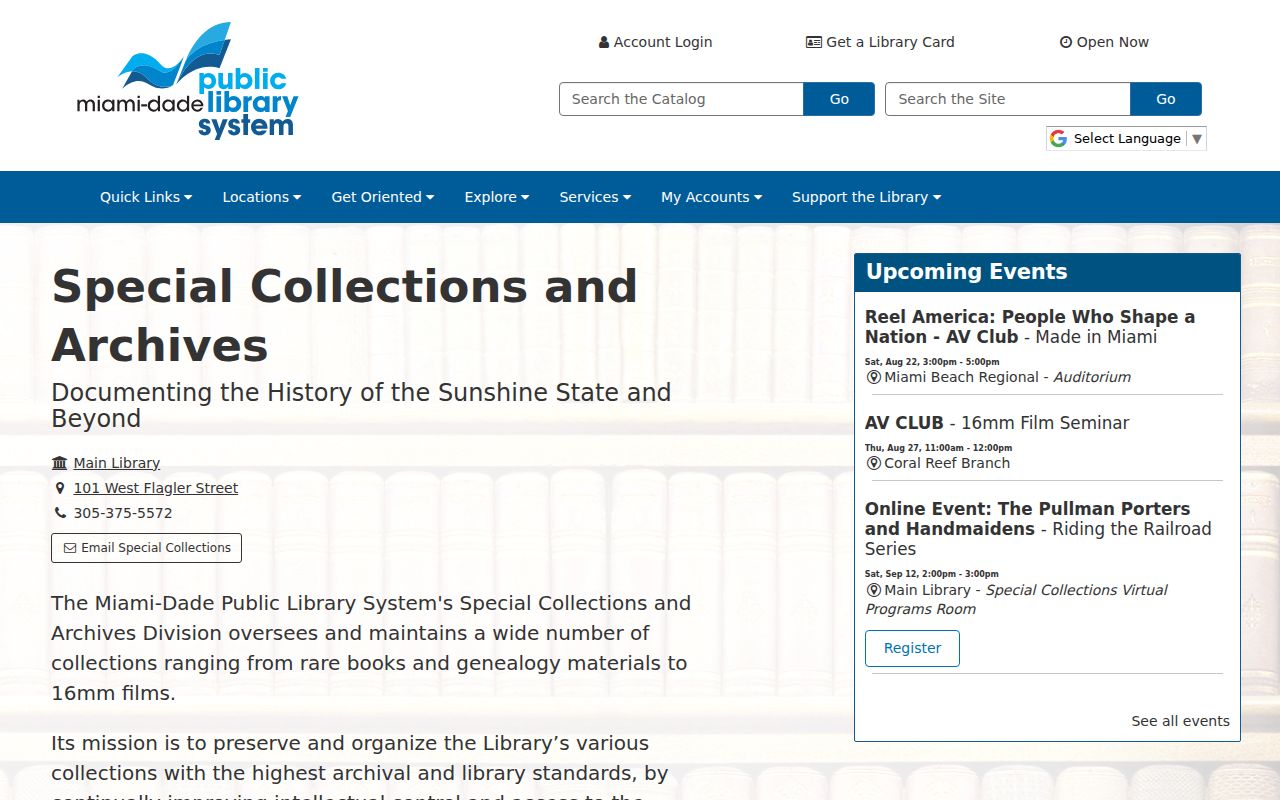
The image points to the library service that can verify editions, microforms, and complementary genealogy sources.
North Dade Miami Gardens Sources
North Dade Regional Library is the closest local branch, at 2455 NW 183 Street in Miami Gardens, with phone 305-625-6424. It opened September 14, 1979, after the Carol City Branch opened in 1972 and after earlier bookmobile service. Its Schomburg Clipping Files and substantial Black Studies reference collection can add people and organizations to a directory result.
The branch has not published its exact directory shelf years. Use it for local reference help and community context, but verify historical editions through Main Library or an archival catalog. This distinction prevents a trip based on an invented shelf run.
Digitized Miami Gardens Genealogy
The MDPLS digitized genealogy collection gives remote access to selected material, not the entire physical shelf. In October 2024, the library also placed donated surname newsletters, family trees, and related files online. In July 2025, Special Collections began releasing web finding aids, first highlighting the Helen Muir Florida Collection and Vasari Project.
The digitized genealogy collection description appears in the page’s successful manifest capture.
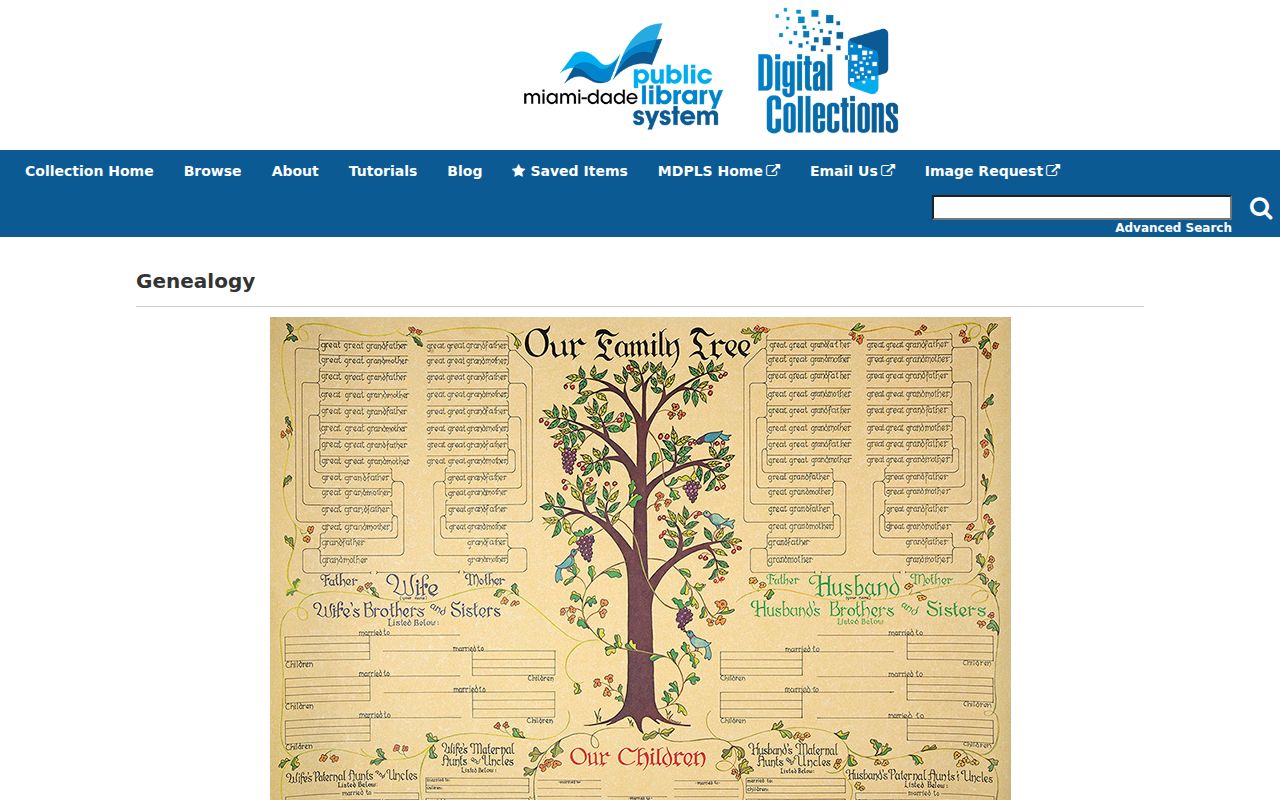
The digital collection can supply names and family material before staff check a physical directory edition.
The online finding-aids announcement is also preserved in a successful capture.
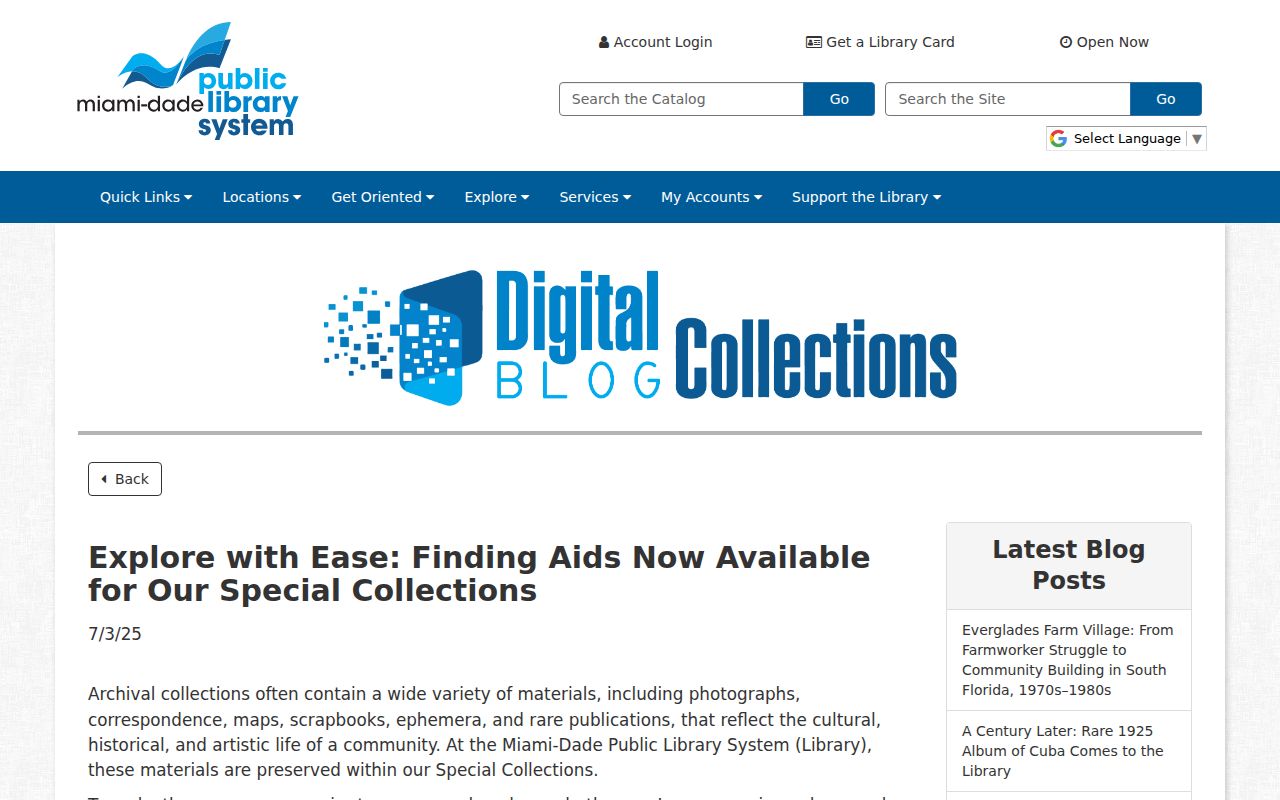
Those aids narrow collection-level questions before an in-person visit.
HistoryMiami Directory Reading Room
HistoryMiami Research Center holds noncirculating directories, yearbooks, scarce newspapers, maps, architectural records, family papers, organizational files, and photographs dating from 1883. The reading room uses staff help, catalog records, and finding aids. Contact 305-375-1623 or archives@historymiami.org before visiting.
HistoryMiami is especially useful when a directory line names a business, school, civic group, or building that the alphabetical entry cannot explain. A photograph or manuscript may show the setting, but it remains a separate source that must be cited on its own.
Trace Miami Gardens Families
A Miami Gardens household search gains value across directory editions. Record the exact transcription rather than only saving a surname.
- Find the earliest confirmed entry under Miami or a predecessor-community term.
- Search the next available editions with spelling variants, spouse, and occupation.
- Use a criss-cross section, when present, to test the address and nearby householders.
- Pair 1919 or 1920 evidence with the 1920 federal census, and later evidence with the 1935 or 1945 Florida census.
- Close a disappearance with a deed, probate file, or the Miami-Dade obituary citation index.
Absence can mean a move, death, unlisted household, missing volume, or a publication gap. It is not a conclusion by itself. Compare chronology and at least two identity anchors.
For a present-day parcel and modern address chain, continue with the Miami Gardens by-street records rather than forcing current facts into an old volume.
Miami Gardens Obituary Directory Link
The free Miami-Dade Obituary Index covers newspaper citations from 1896 through 2008 and contains more than 915,000 people. It identifies the newspaper citation, not the full article. Retrieve the underlying notice to check relatives, dates, addresses, and service details.
The official obituary index search appears in the successful city-directory capture.
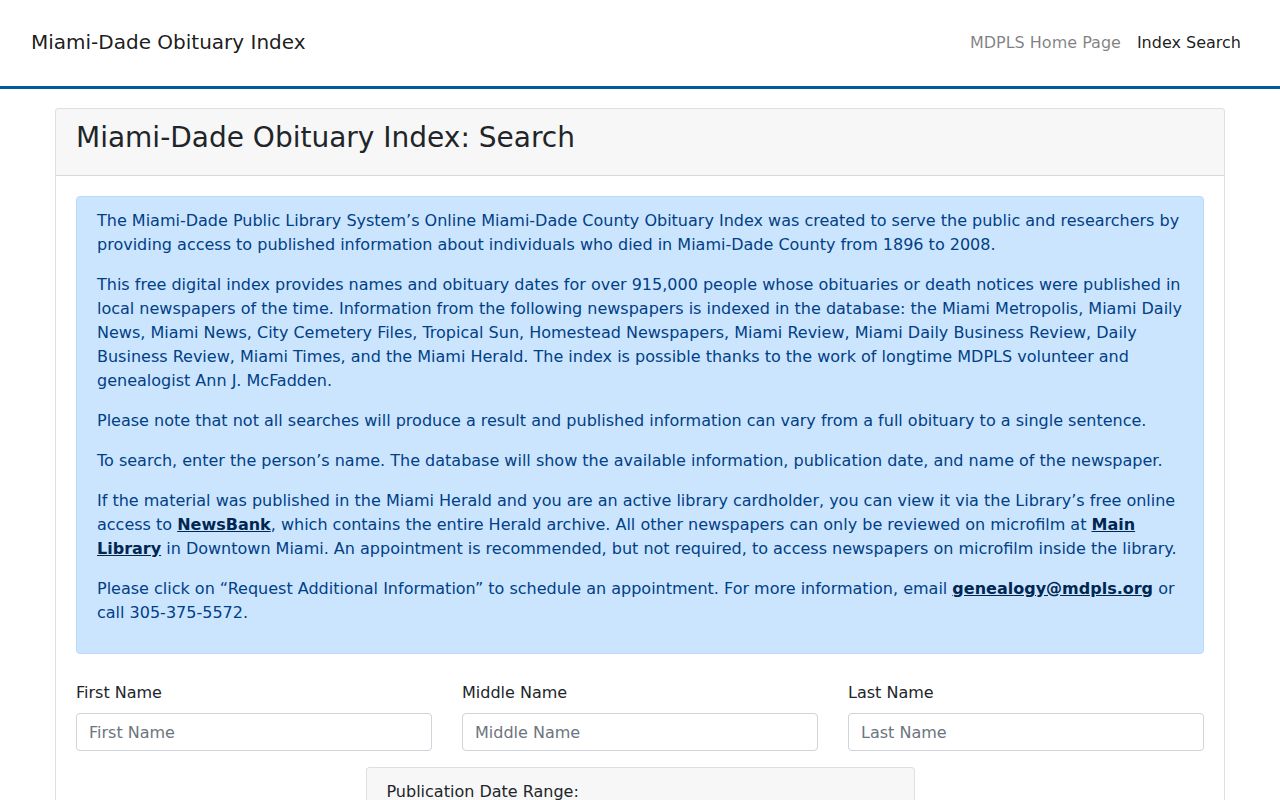
An obituary citation can explain why a person disappears from later editions, but the article and directory must be evaluated separately.
Search Pre-2003 Miami Gardens Names
Miami Gardens incorporated on May 13, 2003. Older city directory, census, newspaper, and archival records are more likely indexed under Miami-Dade County or community terms: Andover, Bunche Park, Brentwood, Carol City, Lake Lucerne, Myrtle Grove, Norland, Opa-locka North, Rainbow Park, and Scott Lake.
Development was heaviest from 1950 through 1969. For many local families, a 1960 Polk example, school yearbook, deed, aerial, and later permit will outperform nineteenth-century sources. The area had dairy farms and oak groves in the 1930s, then grew through postwar development, Black veteran and family settlement, and Caribbean migration. Those facts guide source choice without assigning an identity to any one household.
Miami-Dade’s early records survived a complicated path. Before about 1880, some were kept in Key West, and clerk James A. McCrory later copied Dade material from Monroe books. The claim that a Juno courthouse fire destroyed the records lacks substance because the records had moved. Missing online is not the same as destroyed.
Preserve Miami Gardens Family Material
The MDPLS Community Memory Project digitizes pre-2000 resident photographs, letters, scrapbooks, postcards, and other personal material by appointment. It returns originals and supplies a high-resolution copy. Families can call 305-921-2156.
This is a rare way to preserve neighborhood evidence that never appeared in a published directory. Treat family captions as supplied context, then compare names, dates, and addresses with published or official records.